How the points-based system works
The Skilled Worker visa requires a job from a licensed sponsor at or above the skill level and salary threshold set for that occupation code, plus English at B1 level. Points are mandatory rather than competitive — you either meet the criteria or you do not.
Salary thresholds are updated regularly and vary by occupation, with lower floors for new entrants, shortage occupations and some health and education roles. Always check the current going rate for your specific occupation code.
Health and Care Worker and other work routes
The Health and Care Worker visa is a cheaper, faster branch of the Skilled Worker route for eligible NHS and social-care roles, with no immigration health surcharge. It is the single biggest route used by applicants from Africa and the Middle East.
Other options include the Global Talent visa (endorsed leaders in research, arts or digital technology), Scale-up, Senior or Specialist Worker for intra-company transfers, the High Potential Individual route for recent graduates of top universities, and Seasonal Worker permits in agriculture.
Studying in the UK
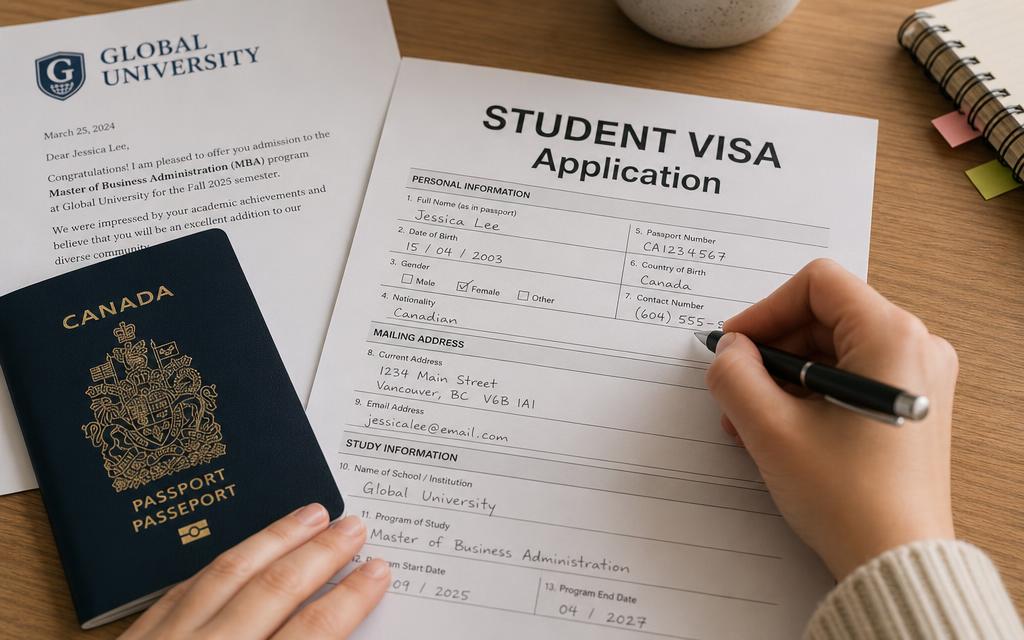
Apply to a licensed student sponsor, accept the offer and receive a Confirmation of Acceptance for Studies, then apply for the Student visa with proof of funds held for 28 consecutive days and secure English evidence.
Students may work up to 20 hours a week during term. The Graduate route gives two years of unsponsored work permission after a bachelor's or master's degree, three after a PhD — the usual bridge to a sponsored job.
Documents you will need
Passport, sponsorship reference number, proof of English (an approved SELT unless exempt), tuberculosis test certificate from an approved clinic for most African and Middle Eastern applicants, bank statements where maintenance funds are required, and translated civil-status documents.
Regulated professions add registration: nurses and midwives through the NMC, doctors through the GMC, teachers and engineers through their own bodies. Start registration before the visa application, because the job offer usually depends on it.
Costs to plan for
Expect the visa application fee, the immigration health surcharge for each year of the visa (waived for health and care workers), the TB test, English test, translations and biometrics. Bringing dependants multiplies the fee and surcharge.
Some sponsors reimburse the visa fee or offer relocation support; get it in writing. Sponsors may not legally pass their own sponsor-licence or Certificate of Sponsorship costs on to you.
Family, dependants and switching
Skilled Worker holders can normally bring a partner and children, who receive full work rights. Most taught master's students can no longer bring dependants; research degrees and government-sponsored students are exceptions.
You can change employer, but a new Certificate of Sponsorship and a new application are required before you start. Losing the sponsored job shortens your permission, so act quickly if a contract ends.
Settlement and citizenship
Five years of continuous qualifying residence on the Skilled Worker route leads to indefinite leave to remain, subject to the salary requirement, the Life in the UK test and B1 English. Global Talent and Innovator routes can settle in three years.
British citizenship normally follows twelve months after settlement, with absence limits over the qualifying period. Keep every payslip, tenancy agreement and travel record: settlement applications are evidence-heavy.
If you are applying from Morocco, North Africa, Africa or the Middle East
- Applicants in Morocco book biometrics at the visa application centre in Casablanca or Rabat; UK decisions are usually fast once biometrics are done, often within three weeks.
- The TB certificate is mandatory for stays over six months for applicants resident in Morocco, most of Africa and much of the Middle East, and must come from a UK-approved clinic.
- Care-sector recruitment from North and West Africa is real but heavily targeted by fake agents; verify the employer on the published register of licensed sponsors before paying anything.
- English test bookings can be the bottleneck — reserve an IELTS for UKVI or other approved SELT slot before you have the job offer if you know you will need one.
Frequently asked questions
- Can I move to the UK without a job offer?
- Only through the Global Talent, High Potential Individual, student, family or youth-mobility routes. There is no general job-seeker visa.
- How long does a Skilled Worker visa take?
- Usually three weeks from biometrics when applying outside the UK, with priority services available. Getting the Certificate of Sponsorship takes longer than the decision.
- Do I need IELTS?
- You need approved English evidence at B1 for work routes and usually B2 for degree study, unless you hold a degree taught in English or are from an exempt country.
- Can my spouse work?
- Yes, dependants of Skilled Worker visa holders have unrestricted work rights.
- When can I apply for settlement?
- After five continuous years on qualifying work routes, meeting the salary requirement and passing the Life in the UK test.
Not sure which route fits you?
Answer a few questions and we will point you to the work, study or immigration guides that match your situation.