Canada
From a Canada Study Permit to Permanent Residence
How international students turn a Canadian study permit into permanent residence: the post-graduation work permit, Canadian Experience Class, provincial streams and the documents to prepare at each stage.
Updated 28 September 2026 · 9 min read
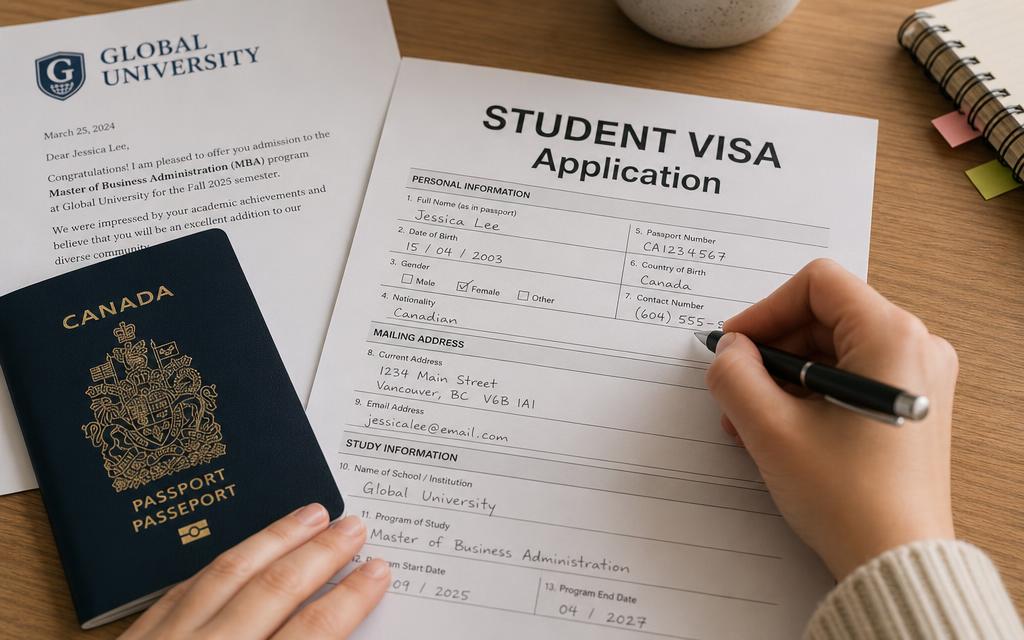
Studying in Canada is one of the most reliable routes to permanent residence — but only if each step is planned. The sequence is usually: study permit, post-graduation work permit, skilled work experience, then a permanent residence application. Here is how the stages connect.
Getting the study permit
You need an acceptance letter from a designated learning institution, proof of funds for tuition and living costs, and a credible study plan. Most applicants also provide biometrics and, depending on the country, a medical exam.
A provincial attestation letter is now required for most study permit applications — the school or province confirms your place within the national cap, so apply to institutions early.
Working while you study
Full-time students at eligible institutions can usually work a limited number of hours per week during academic sessions and full-time during scheduled breaks, without a separate work permit.
Part-time work helps with living costs, but the work that counts most for permanent residence is the skilled experience you gain after graduating.
The post-graduation work permit (PGWP)
After completing an eligible program, you can apply for a PGWP — an open work permit whose length depends on the program, up to three years. You can only receive a PGWP once in a lifetime, so timing matters.
Apply within the deadline after your school confirms you completed the program, and check that your institution and program are PGWP-eligible before you enrol, not after.
Turning experience into PR
One year of skilled Canadian work experience typically makes you eligible for the Canadian Experience Class through Express Entry. Canadian education and experience both add CRS points, and French-language ability adds more.
Many provinces also run graduate streams that nominate international graduates of local institutions, sometimes with a job offer and sometimes without. A nomination adds 600 CRS points.
Costs to plan for
Budget for tuition, the study permit fee, biometrics, proof-of-funds requirements, the PGWP fee and later the permanent residence fees. Numbers change regularly — use the official fee list at the moment you apply.
Scholarships, assistantships and part-time work reduce the pressure, but immigration officers expect to see that your funding is real and available from day one.
Mistakes that break the chain
Choosing a program that is not PGWP-eligible, letting the study permit lapse before applying for the PGWP, or working more hours than allowed can each cut off the route to PR.
The other common error is waiting until the PGWP expires before building an Express Entry profile — enter the pool as soon as you qualify, because draws and category eligibility change over time.
Frequently asked questions
- How long is the post-graduation work permit?
- It depends on the length and level of your program, up to a maximum of three years. Check the current PGWP rules for your credential before applying.
- Can my spouse come with me while I study?
- In many cases a spouse can apply for an open work permit and children for study permits, though eligibility rules have tightened — verify the current criteria for your program level.
- Is a study permit a guarantee of permanent residence?
- No. It is a pathway, not a promise. You still need to qualify for a PR program on your own merits, so treat grades, language scores and skilled work experience as part of the plan from the start.
More guides you may like
شارك هذا الدليل
التعليقات
اطرح سؤالاً أو شارك تجربتك، ورُدّ على الآخرين لتبقى المناقشة في مسار واحد. ونرجو عدم نشر وثائق شخصية أو معلومات اتصال.
جارٍ تحميل التعليقات...